Educational blog to tell you how to be a good teacher and how to be an excellent student. Improve your motivation, psychological skills and pedagogical skills.
Wednesday, January 29, 2014
Encourage your child to give explanations
Saturday, October 8, 2011
Play to learn.... how to???
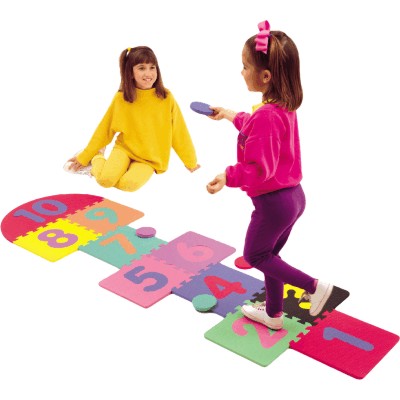
LEARNING through play opens the child’s mind to what is in the environment. They discover how things are done and develop the understanding of right and wrong from playing.
Children thrive on simple yet meaningful play experiences.
Balls – Babies like holding soft balls while toddlers enjoy the rubbery ones that they can hold with both hands and throw. Preschoolers love playing ball-catching with their friends. As they grow and develop more skills, they start playing ball games with rules.
Blocks – They come in all sizes, shapes and colours. I still love the wooden ones that children can stack them up in a tall tower when they are just babies or toddlers. When they become preschoolers, they build bridges and houses of all types.
Cardboard boxes and containers – Babies like to repeatedly put objects into a container and then tip them out. Older children will explore ways to play with containers of all sizes and shapes.
Sand and water play – This is a self-directed and engaged learning for young children. Add fun things like food colouring, turkey baster, funnel, cups and plastic toys. Young children will be busy for a long time.
A walk – Children need outdoor play. They need to run and jump freely. They can discover interesting living organisms in their natural surroundings. This experience will truly spur them to greater heights of creativity and learning.
Scarves and bedsheets – They can throw the scarves up in the air and watch them float down to touch their faces. They can wave them around and do their special dances. My then preschool-age daughters would use a bedsheet as a parachute or pretend that it is a popcorn popper with balloons. As they grew older, they used bedsheets to create tents for their special hide-outs.
Mirror, mirror on the wall – Babies and toddlers like looking at mirrors to discover themselves and others. Preschoolers love making different or funny faces in front of the mirror. Put two mirrors in front and at the back of an object for your child to view. He can see the object from both sides. To add to your child’s learning fun, make a triangular box of mirrors for your child to put different objects in it (make sure you seal off the sharp sides).
Painting – Children like messy play. Finger-painting is a great start to working creatively with colours for young children. Use large pieces of paper and non-toxic paints.
Singing – Singing simple nursery rhymes with children can expand their imagination and help them develop phonemic awareness. They will also exercise their auditory memory skills.
Puzzles – Home-made or store-bought puzzles are educational and fun for children from late infancy to preschool age. Start with two pieces to pair up, working towards more pieces for the child to put together. The younger the child is, the larger the pieces.Parents as children’s first play-partners provide both educational and entertaining fun.
There is no greater fun for a child than having his parents get down on the floor and spend some time, say about 15 minutes, to play with him without giving any suggestions or directions. Children who take the lead in play will gain much as they get to practise their skills and experiment safely with their new ideas. They feel confident when the adults let them plan and direct their play session together.
Saturday, May 23, 2009
Learning???

Learning as a product
Pick up a standard psychology textbook - especially from the 1960s and 1970s and you will probably find learning defined as a change in behaviour. In other words, learning is approached as an outcome - the end product of some process. It can be recognized or seen. This approach has the virtue of highlighting a crucial aspect of learning - change. It's apparent clarity may also make some sense when conducting experiments. However, it is rather a blunt instrument. For example:
- Does a person need to perform in order for learning to have happened?
- Are there other factors that may cause behaviour to change?
- Can the change involved include the potential for change? (Merriam and Caffarella 1991: 124)
Learning as a process - task-conscious or acquisition learning and learning-conscious or formalized learning
In the five categories that Säljö identified we can see learning appearing as a process - there is a concern with what happens when the learning takes place. In this way, learning could be thought of as 'a process by which behaviour changes as a result of experience' (Maples and Webster 1980 quoted in Merriam and Caffarella 1991: 124). One of the significant questions that arises is the extent to which people are conscious of what is going on. Are they aware that they are engaged in learning - and what significance does it have if they are? Such questions have appeared in various guises over the years - and have surfaced, for example, in debates around the rather confusing notion of 'informal learning'.
One particularly helpful way of approaching the area has been formulated by Alan Rogers (2003). Drawing especially on the work of those who study the learning of language (for example, Krashen 1982), Rogers sets out two contrasting approaches: task-conscious or acquisition learning and learning-conscious or formalized learning.
Saturday, May 16, 2009
Howard Gardner: Multiple Intelligence

Howard Gardner initially formulated a list of seven intelligences. His listing was provisional. The first two have been typically valued in schools; the next three are usually associated with the arts; and the final two are what Howard Gardner called 'personal intelligences' (Gardner 1999: 41-43).
Linguistic intelligence involves sensitivity to spoken and written language, the ability to learn languages, and the capacity to use language to accomplish certain goals. This intelligence includes the ability to effectively use language to express oneself rhetorically or poetically; and language as a means to remember information. Writers, poets, lawyers and speakers are among those that Howard Gardner sees as having high linguistic intelligence.
Logical-mathematical intelligence consists of the capacity to analyze problems logically, carry out mathematical operations, and investigate issues scientifically. In Howard Gardner's words, it entails the ability to detect patterns, reason deductively and think logically. This intelligence is most often associated with scientific and mathematical thinking.
Musical intelligence involves skill in the performance, composition, and appreciation of musical patterns. It encompasses the capacity to recognize and compose musical pitches, tones, and rhythms. According to Howard Gardner musical intelligence runs in an almost structural parallel to linguistic intelligence.
Bodily-kinesthetic intelligence entails the potential of using one's whole body or parts of the body to solve problems. It is the ability to use mental abilities to coordinate bodily movements. Howard Gardner sees mental and physical activity as related.
Spatial intelligence involves the potential to recognize and use the patterns of wide space and more confined areas.
Interpersonal intelligence is concerned with the capacity to understand the intentions, motivations and desires of other people. It allows people to work effectively with others. Educators, salespeople, religious and political leaders and counsellors all need a well-developed interpersonal intelligence.
Intrapersonal intelligence entails the capacity to understand oneself, to appreciate one's feelings, fears and motivations. In Howard Gardner's view it involves having an effective working model of ourselves, and to be able to use such information to regulate our lives.
Wednesday, April 15, 2009
ASSURE Model: The best way to organize the lesson plan.
State objectives
Select instructional methods, media, and materials
Utilize media and materials
Require learner participation
Evaluate and revise
The ASSURE model is one of the way for teacher to design and develop the most appropriate learning environment for their students. You can use this process in writing your lesson plans and in improving teaching and learning.
- Analyze learner- teacher must know the standard of the students like age, sex, socioeconomic level and etc. Teacher also must know the level of the students cognitive skill. Beside that the way of how the student love to learn must be analyze.
- State objective- Objectives are the learning outcomes, that is, what will the student get out of the lesson?
- Select instructional methods, media and materials- The selection of the methods, media (video, audio, computer, etc.) and materials must be appropriate withe the students and the lesson to meet the objective stated.
- Utilize media and materials- test the media and make sure all of them working. Make sure the media and materials can be use in the classroom.
- Require learner participation - try to make the student take part in the teaching and learning session. Try to avoid lecturing. Listen to your students and allow them to become aware of the content. Allow them to learn as opposed to trying to "teach" them.
- Evaluate and revise - Evaluate the teaching and learning session whether achieve the objective or not. Try to state the weaknesses and the ways to overcome it in the next session.
Monday, April 6, 2009
Play: Fun in the classroom.

Wednesday, March 25, 2009
The reasons I write here
2. To improve my English grammar and writing.
3. To get feedback of whoever had read this blog.
4. To discuss and share opinion about educational topics.
5. To share information how to be an excellent student.
I am a teacher and student
It’s not easy to be a good teacher and a excellent student. I work as a teacher at a Primary School in Malaysia and a student of a programme called PGSR ( Pensiswazahan Guru Sekolah Rendah) which is sponsored by the Government. I am studying for my first degree. I had Diploma of Education. Now I am on first year of 4 years journey to finish the study.
Actually I just finished my first part(semester). I hope I have done very well on the examination. My target for this part is 3.7 above. I will discuss what I had learnt and my opinion about education nowadays.
As a teacher and student, I directly involve into the education and the must for me to become skilled on Psychology and Pedagogy. Psychology is one of the important element to teach. A teacher must figure out the psychological condition of his or her student. From this the teacher can create a good environment and conducive for the student. When the student is on the conducive situation, they can learn well and can give fully attention to the content or skills that they are learning.